Prince Gong's Mansion
"If you get to choose, an emperor's palace, a prince's mansion, a non-royal yet decent courtyard house, which one you'd choose to live in?"
"Prince for me, you?"
"Royalties feel heavy and empty to me. Non-livable."
TanTan would choose Ling Shuhua's thousand-square-meter courtyard over this sixty-thousand-square-meter mansion. Last week over this week.
Week 5: Prince Gong's Mansion 恭王府
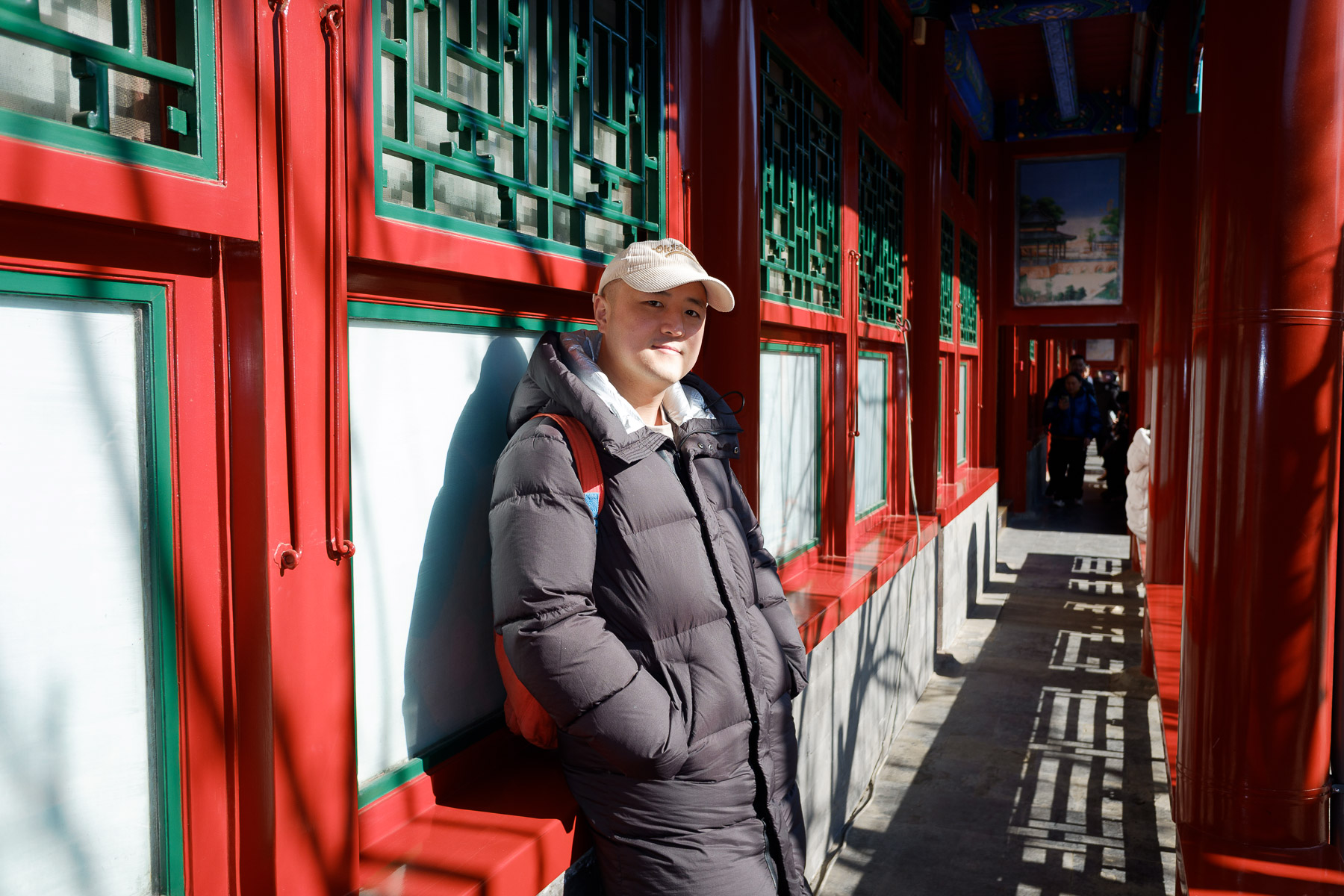
I choose it over the palace (here I mean the Forbidden City of course), because it's handleable.
188 × 330 meters vs. 753 × 961 meters.
Inside Prince Gong's Mansion, I feel I am in control of a powerful space.
Inside the Forbidden City, I feel controlled by a powerful space.
Perhaps we all like to be in control of something. Better, something powerful.
TanTan nods.
Prince Gong's Mansion can be approached through three owners and three eras.
The whole arc of Qing decline compressed into one mansion.

The First Owner: Heshen 和珅 (1750–1799)
Everyone knows his name.
Over twenty years: controlled the empire's personnel, money, law. Married his son to the emperor's favorite daughter.
He designed this mansion himself and started building it in 1776.
A stock villain in a hundred TV dramas. Corrupt, brilliant, and above all, favored by Qianlong emperor.
His notorious crime goes along with his extraordinary taste.
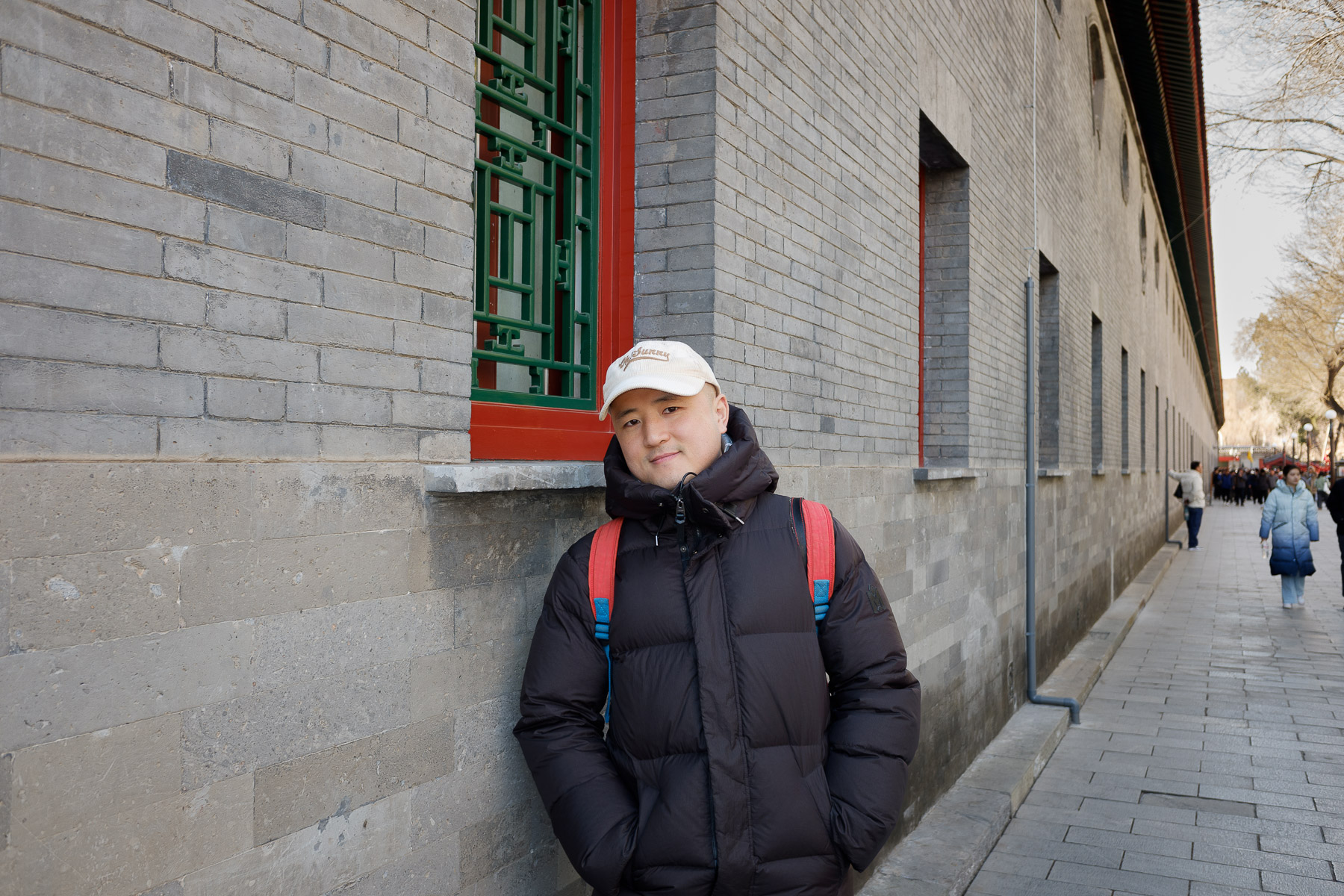
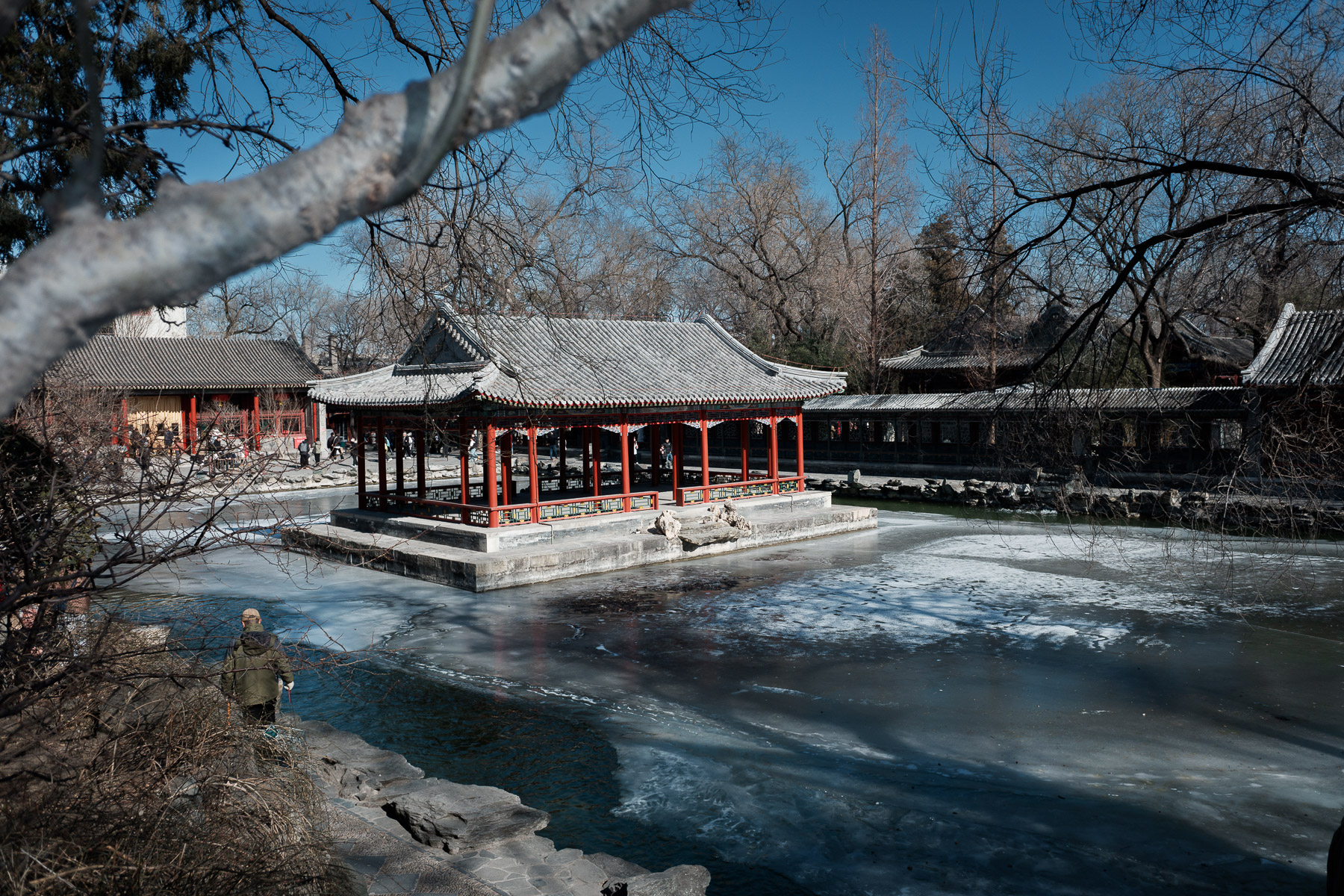
Look at Xijin zhai 錫晉齋 (Jiale tang 嘉樂堂 in Heshen's time), where Heshen lived.
Look at Ningshou Palace 寧壽宮, which Emperor Qianlong built for his own retirement.
Highly alike.
This was "exceeding one's station" 僭侈逾制.
Crime Number Thirteen on the indictment.
Crime Thirteen is already grave yet trivial in comparison to the wealth he illegally acquired—more than the annual budget of the entire empire.
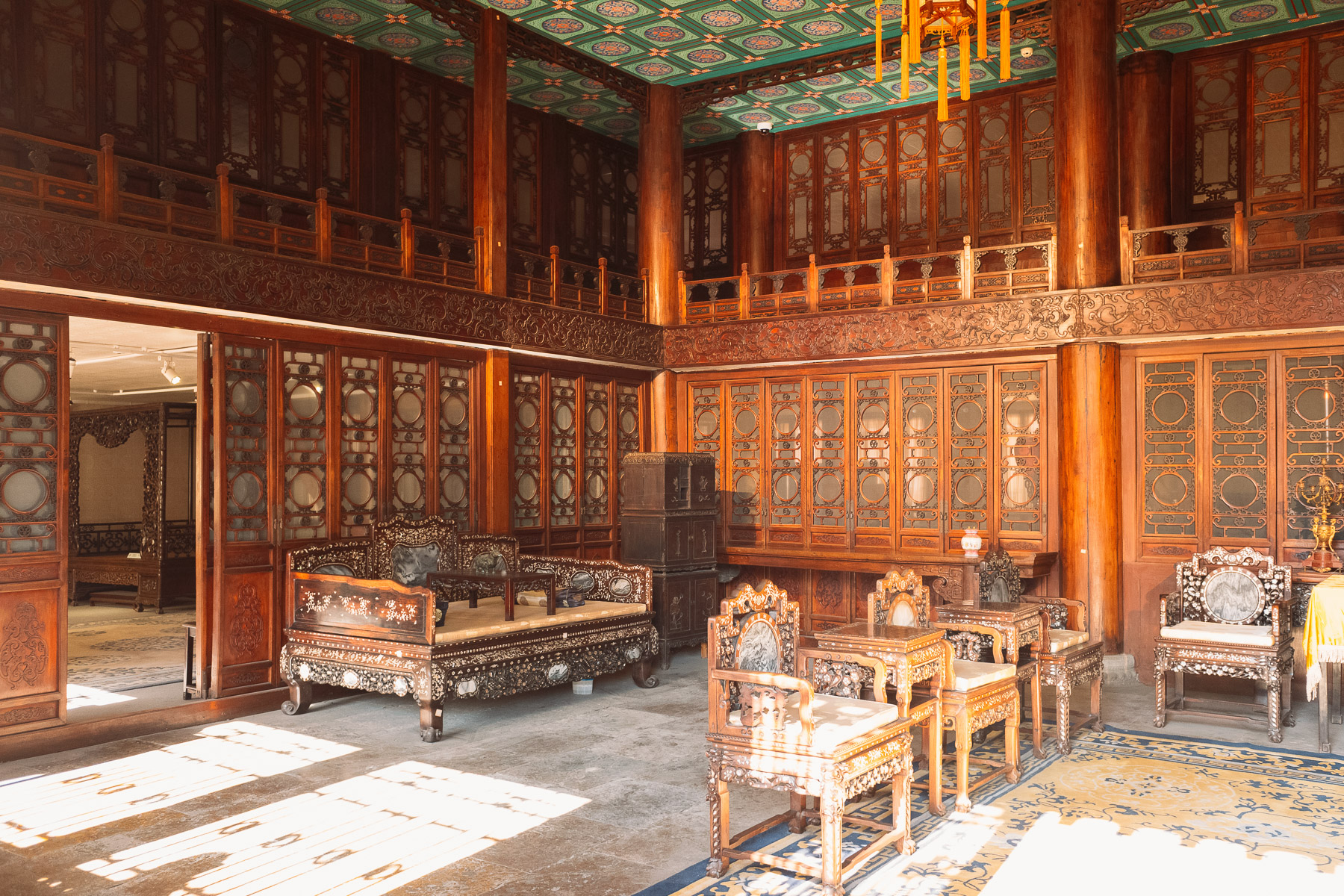
But peek into his room.
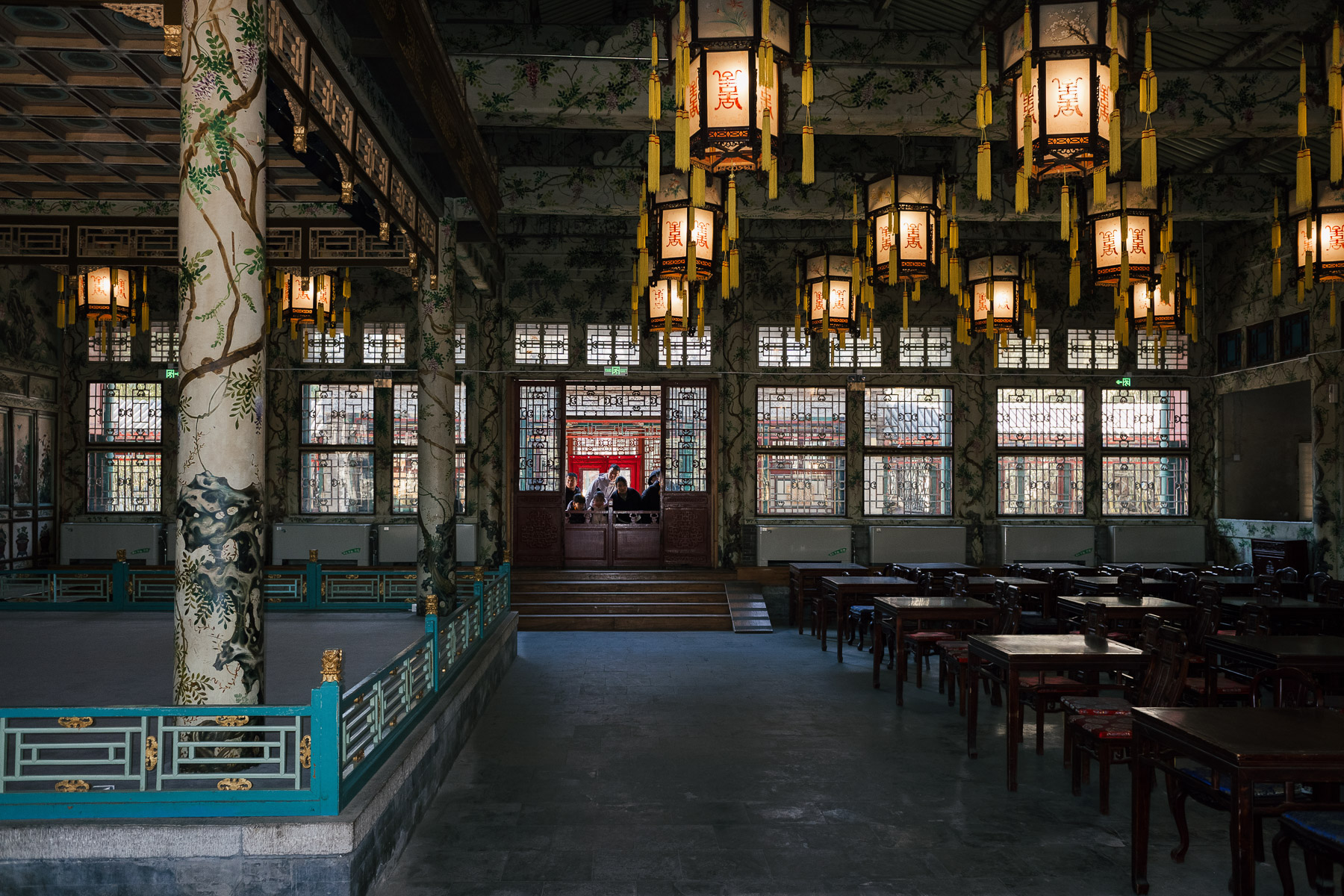
Every partition, every balustrade, every carved panel: golden nanmu wood 金絲楠木.
Would its faint fragrance, its golden-yellow luster, its delicate silk-like fibers, its royal exclusive histories remind you of Heshen's crimes? Or his powers? Or something else you wish you could have. Just a bit. Just a bit you'd also do crime for.
The Second Owner: Prince Qing Yong Lin 慶親王永璘 (1766–1820)
This guy wasn't interested in the throne like other princes.
Wasn't interested in who would be next in the throne either.
All he wanted was Heshen's mansion.
Who doesn't?

He gets it after his brother becomes Jiaqing Emperor 嘉慶帝 (r. 1796–1820).
Jiaqing's reign is less talked about than his father Qianlong's. Except for one thing.
Heshen.
Qianlong dies, February 1799. Jiaqing seizes real power. Five days later, Heshen is arrested.
The immense wealth went to the state coffers.
The mansion went to his unambitious brother who lived there for twenty-two years.
The Third Owner: Prince Gong Yi Xin 恭親王奕訢 (1833–1898)
Now the mansion gets its name.
But first let's talk about his nickname.
鬼子六, "Devil Number Six"—the sixth son who collaborated with foreign devils.
Not a fair nickname to him though.
When Emperor Xianfeng 咸豐帝 (r. 1851–1861) and his whole court fled Beijing, Yixin was left to negotiate with British and French forces who had defeated the Qing army and destroyed the Old Summer Palace 圓明園.
It was October 1860.
He signed a bunch of terms—humiliating and costly terms that forced China's doors open wider, ceded territory, and began decades of unequal treaties.
But he had no choice.
Yixin understood what the Opium Wars meant. China needed Western technology, Western military methods, Western institutions—or it would be dismembered.
Yixin moved into this mansion in 1851. It became Gongwang fu—Prince Gong's Mansion. He lived here through coup, reform, humiliation, and brief hope. Forty-seven years.

Pushing for modernization against conservative resistance at every step, he supported Zeng Guofan 曾國藩, Li Hongzhang 李鴻章, Zuo Zongtang 左宗棠—the great provincial reformers who built arsenals, shipyards, telegraph lines.
It wasn't enough.
The Sino-French War (1884) and the First Sino-Japanese War (1894–1895) exposed how shallow the modernization had been. By the time Yixin died in 1898, the empire was careening toward collapse.
Within months: the Hundred Days' Reform, the 1898 coup, the Boxer Rebellion. The end.
Power shapes space. Vice versa.
Yet people go powerless. The space doesn't.
Jan 31, 2026.