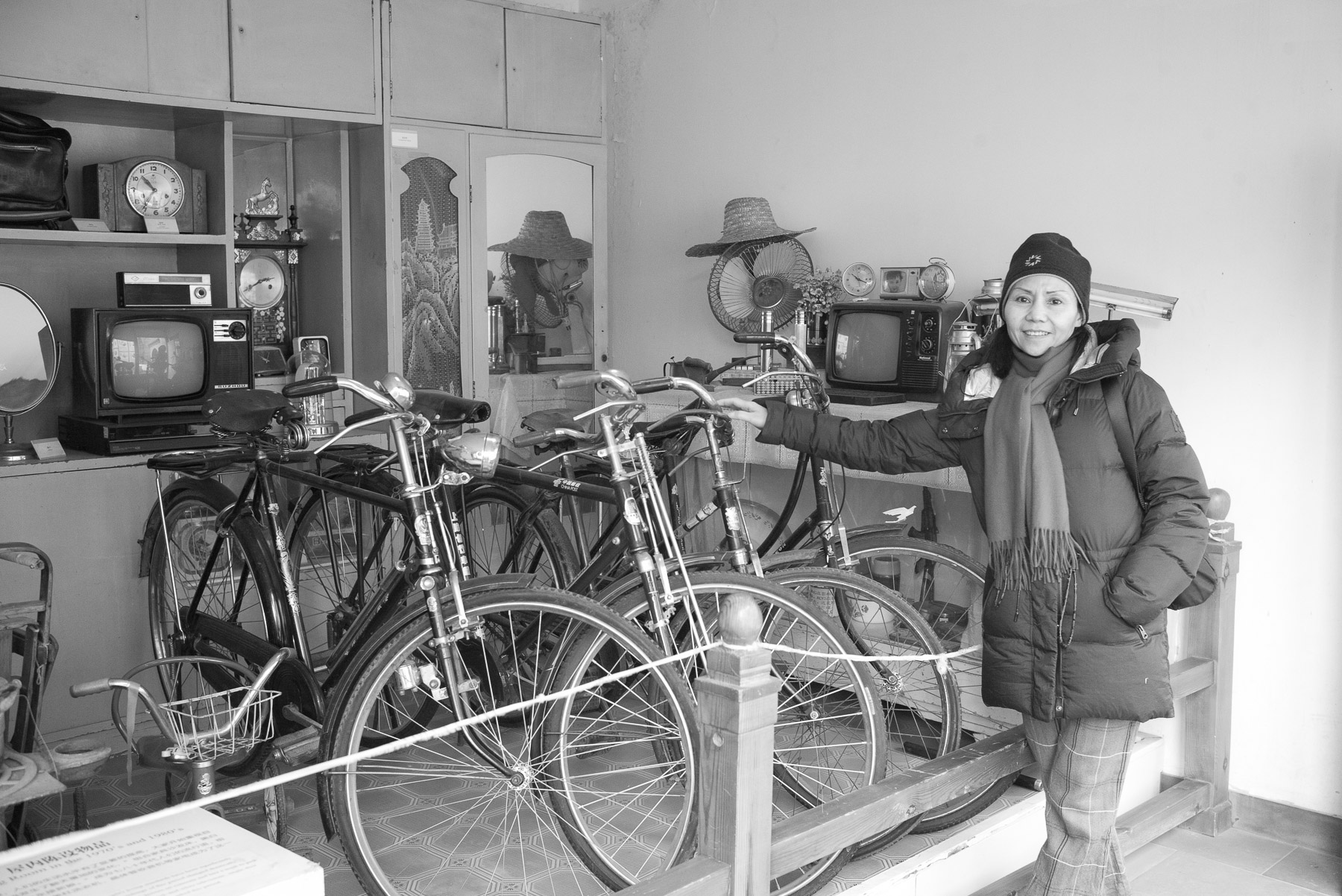
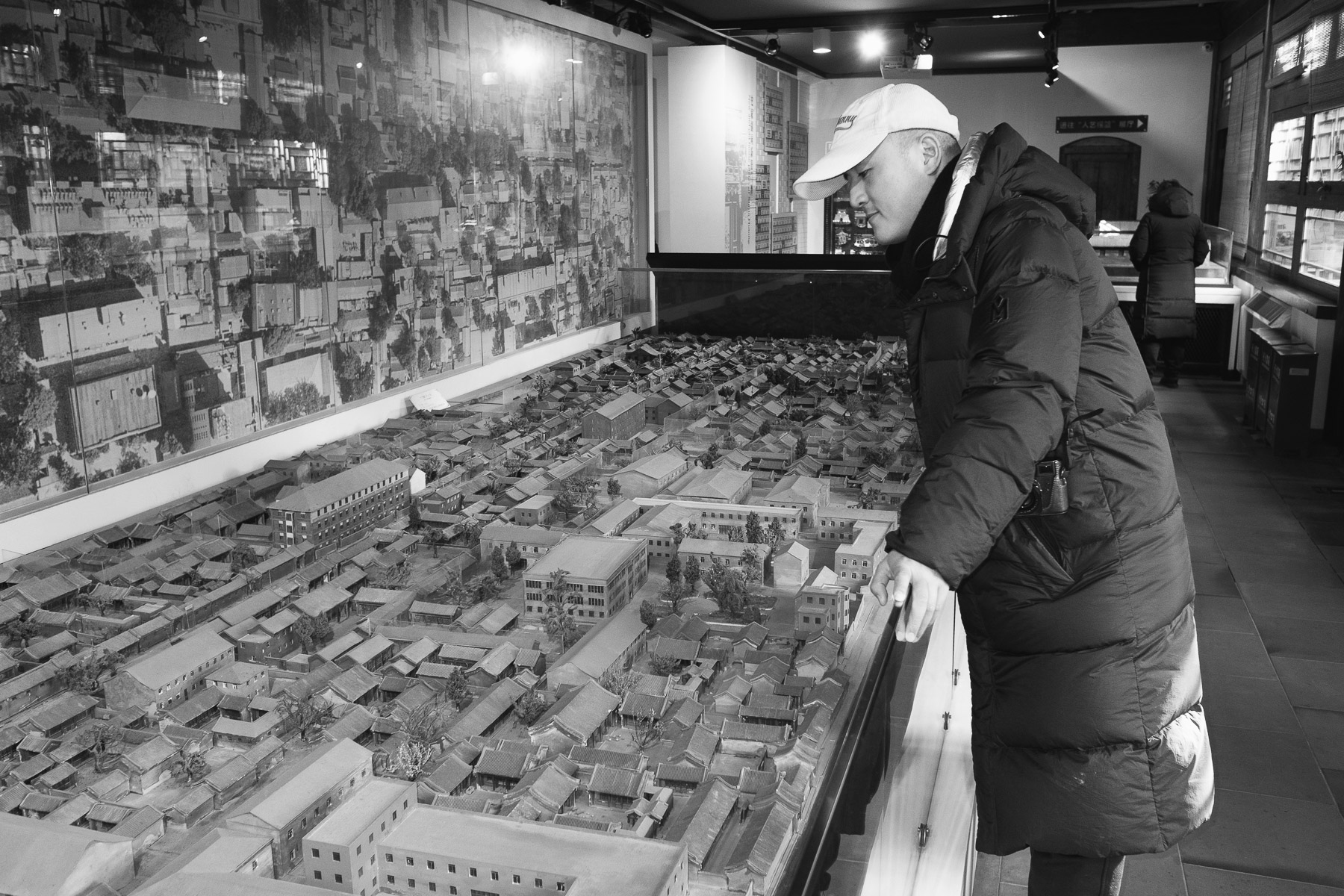
Shijia Hutong Museum
"How do you know from a walk that it's a date or just a hangout?"
"Simple. Parks or Hutongs?"
"If I walk with a guy in a park, we're just friends. If in Hutongs, we're dating. Or will."
Silly Q&A between me and TanTan.
Luckily, she walked with me in both.
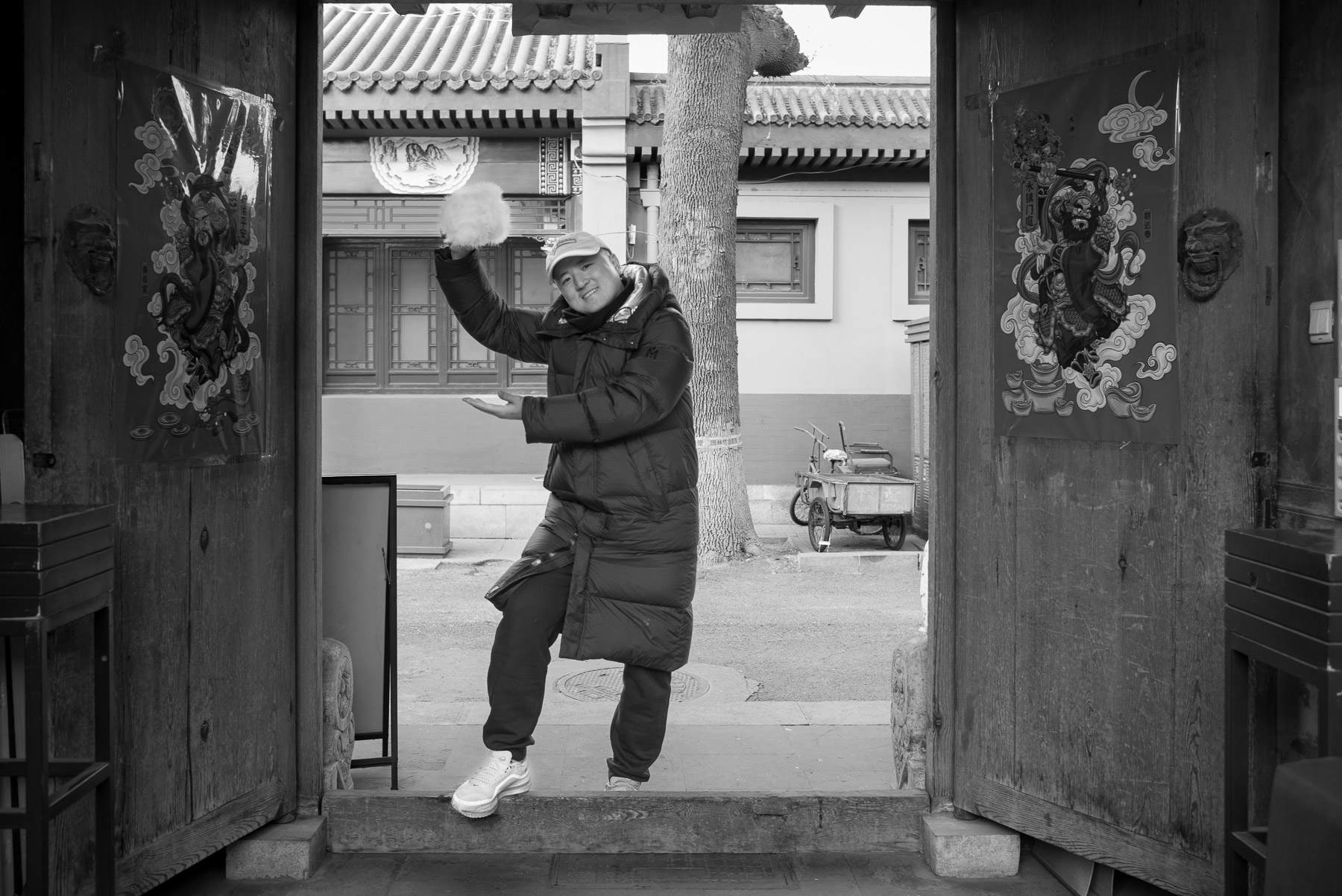
Hutongs. Narrow alleys running west to east, several hundred meters long, three to nine meters wide. Short courtyard houses to both sides, gray brick, sloped tile roofs. High trees at both ends—scholar trees mostly, or Chinese parasols, bare now, branches like cracks in the white sky. Public toilets near the crossroads, the smell announcing them before the sign does.
Some doors are open.
Peeking inside: bike leaning against a wall, pipes exposed and painted over too many times, a folding chair with a cushion worn thin, thermoses, basins, a birdcage hanging from a nail.
Messy stuff that makes you want to see more.
Parks are stage sets. Open, legible, everyone performing leisure. Couples on paddleboats. Grandparents doing tai chi. Kids with kites. You don't have to mean anything by being there. You're visible to everyone and intimate with no one.
Hutongs are backstage. You enter them. The narrowness presses you closer before either person decides anything. Domestic life spills into the alley—someone's laundry stiff with cold on a line, someone's argument drifting through a window, someone's grandmother watching from a plastic chair, hands tucked into her sleeves, missing nothing. A man in a padded jacket plays chess with himself. A woman shells peanuts into a plastic bag, breath visible. They don't look up when you pass. Or they do, briefly, then look away.
You're inside something even while outside.
That's the difference. Parks are public. Hutongs are semi-private. Walking there with someone means you've both agreed to be seen in the in-between.
9 out of 10 times TanTan hangs out with old friends, it's Hutongs. Friends she still cares to see over years. They pick a bar tucked behind a red door, or a coffee shop that used to be a coal shed, or they just walk—no destination, just the alley narrowing and widening, narrowing and widening.
10 out of 10 times with dates? Hutongs.
I asked why.
She said she didn't know. Just feels right.
Fourth week. A well-preserved Hutong, a well-preserved courtyard.
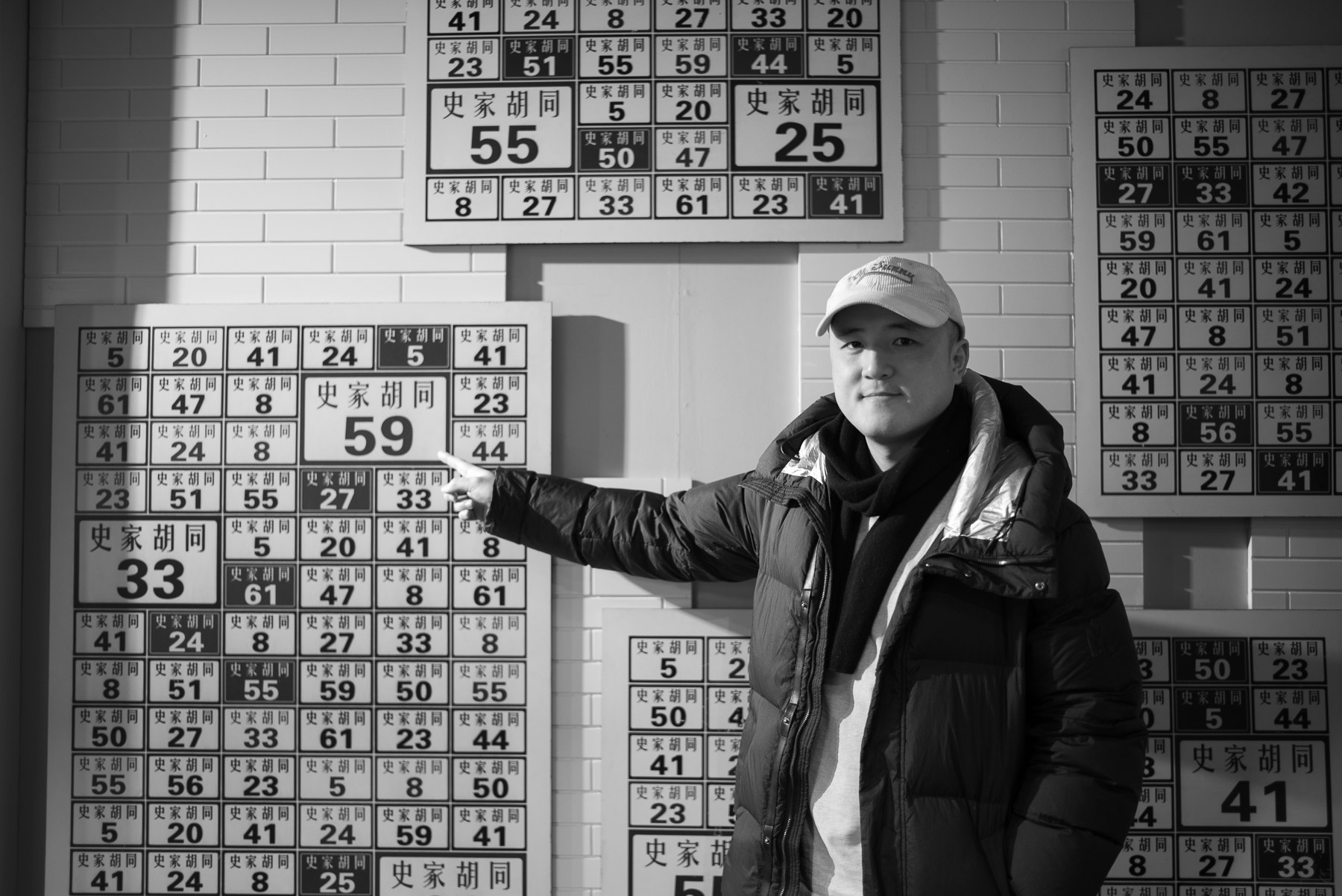
Shijia Hutong Museum 史家胡同博物館. Number 24.
This one is not messy. Two courtyards deep. Over a thousand square meters. Gray brick walls, carved wooden screens, potted plants arranged just so. It used to be the mansion of Ling Shuhua, one of the most famous female artists in Republican China—painter, writer, socialite. Her daughter donated it to be a museum of the Hutong itself.
Ling used to invite intellectuals and political elites for afternoon tea. Writers, diplomats, professors, editors. When these people gathered in a courtyard house, tea became a salon. The most famous literary gatherings of 1920s and 30s Beijing happened here, in rooms arranged around a rectangle of sky.
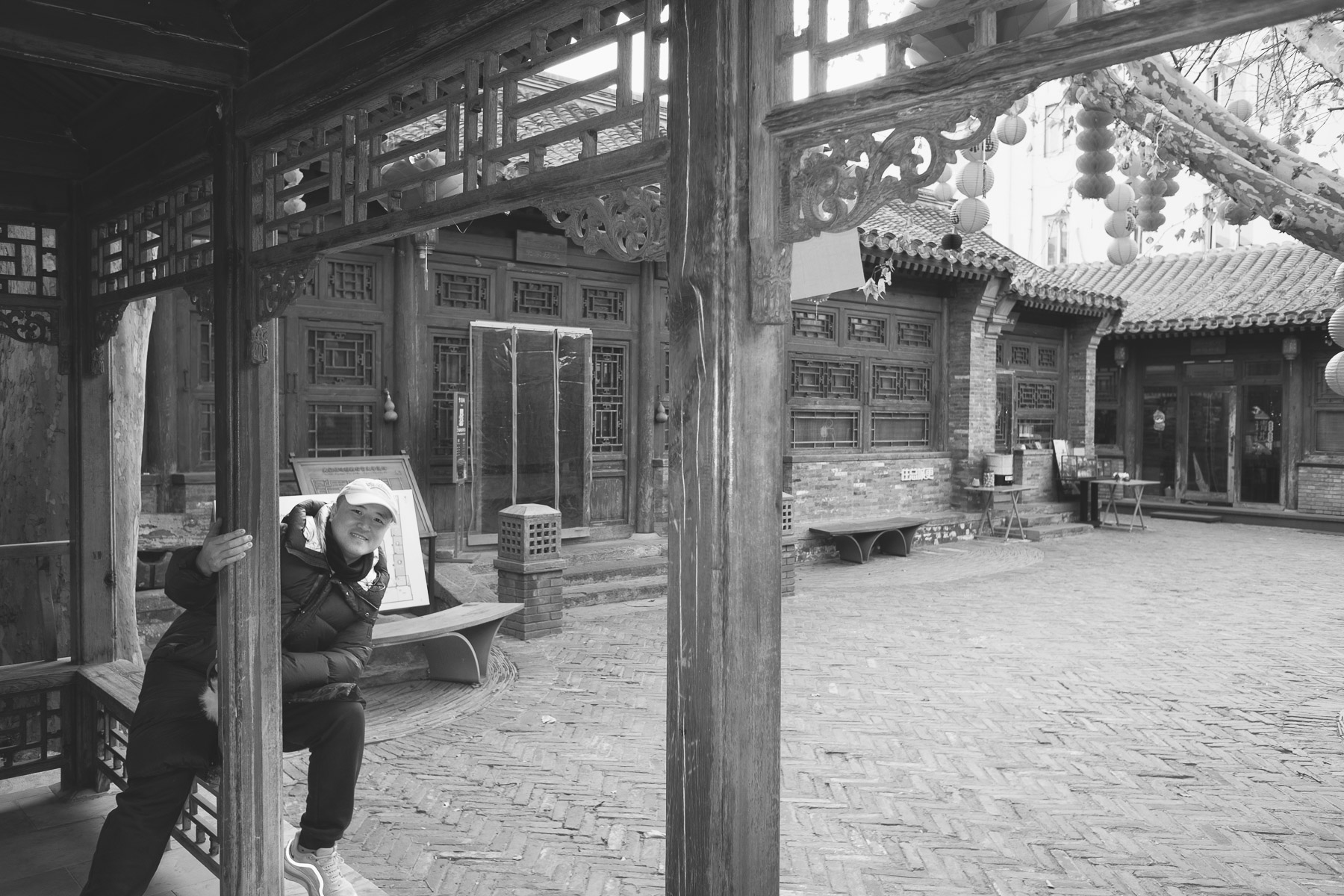
I think I understand why the space mattered.
A courtyard house is built around a central yard you cross to reach each room. North room for the elders. East and west wings for the children. South building for guests or servants. But to get anywhere, you walk through the courtyard. Everyone sees everyone arrive. Everyone passes through shared space to get to private rooms. The architecture choreographs encounter. You can't slip in unnoticed. You can't avoid the host. You sit, you talk, you're seen talking—and later, leaving.
A ballroom lets you disappear into a crowd. A courtyard house makes you legible to everyone present. Intimacy is structural. You don't choose it; the walls choose it for you.
Same logic as the Hutong itself. Semi-visible. Semi-private. Intimacy without announcement.
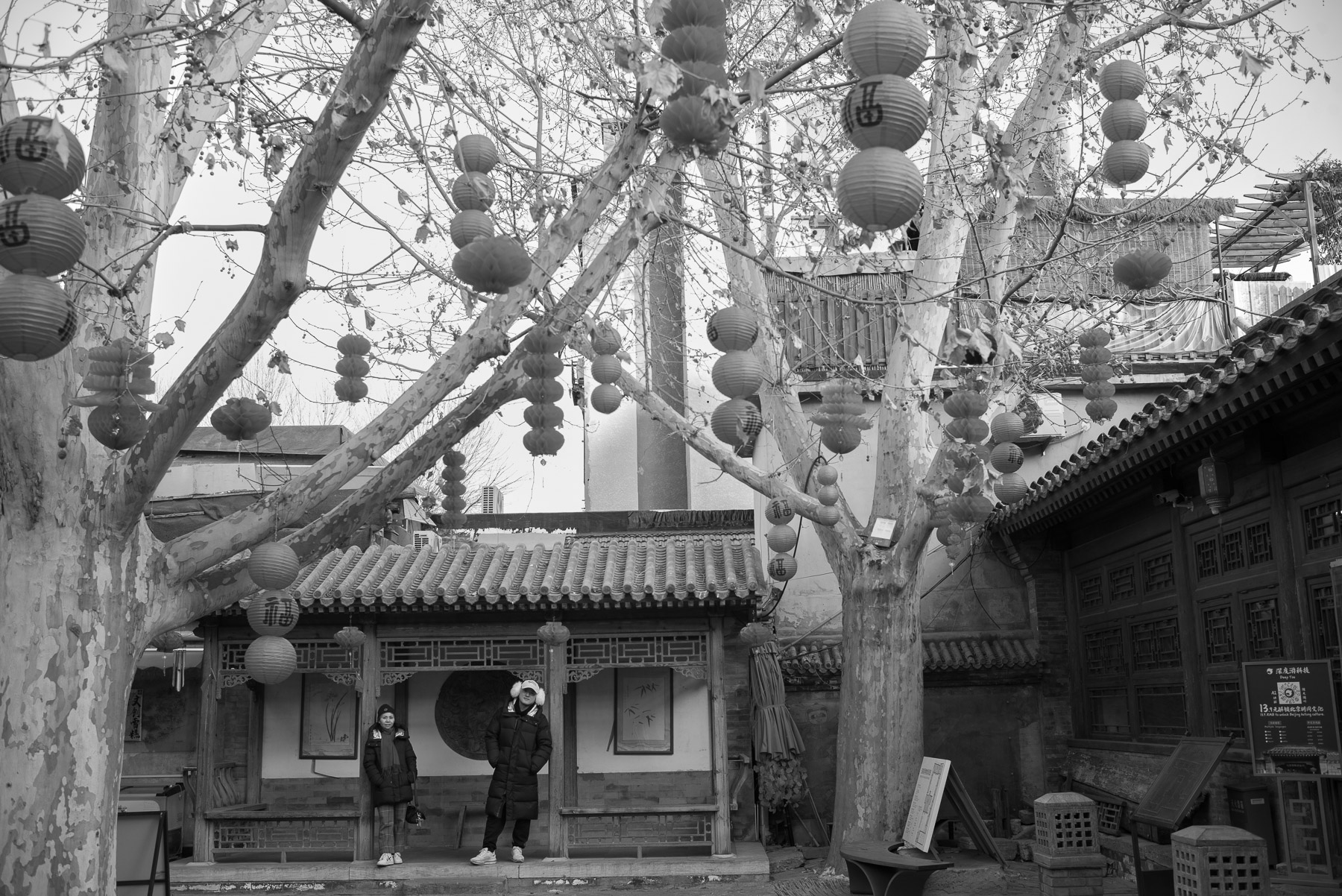
High-rises don't work this way.
Commodity housing. Elevator to your floor, key in your lock, door shut. The hallway fluorescent and empty. You could live there for years and never learn your neighbor's name, never see their laundry, never hear their grandmother cough. The building is efficient. The building is private. The building is lonely.
No one walks through a shared courtyard. No one leaves their door open. No one sees you arrive.
We walked Shijia Hutong on January 22nd. Overcast, cold. The kind of gray that flattens everything, makes the brick walls look older than they are. Bare branches overhead, no leaves to soften the sky.
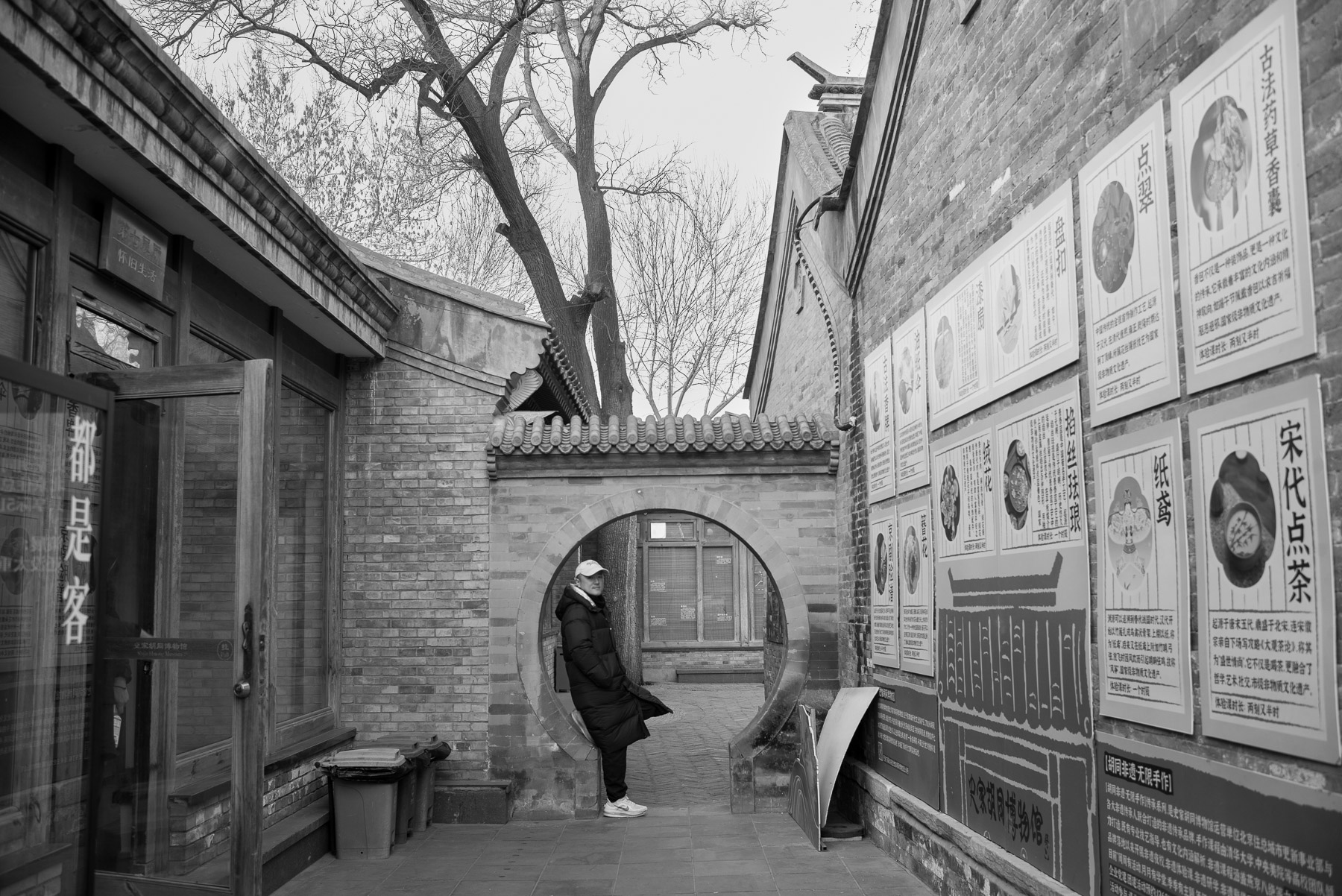
TanTan's mom joined us again. The courtyard reminded her of the house she grew up in, southwest China. But she's happier with the high-rise now. Or at least not nearly as fascinated by what she left behind.
Mom remembers. TanTan imagines. Not the same ache.